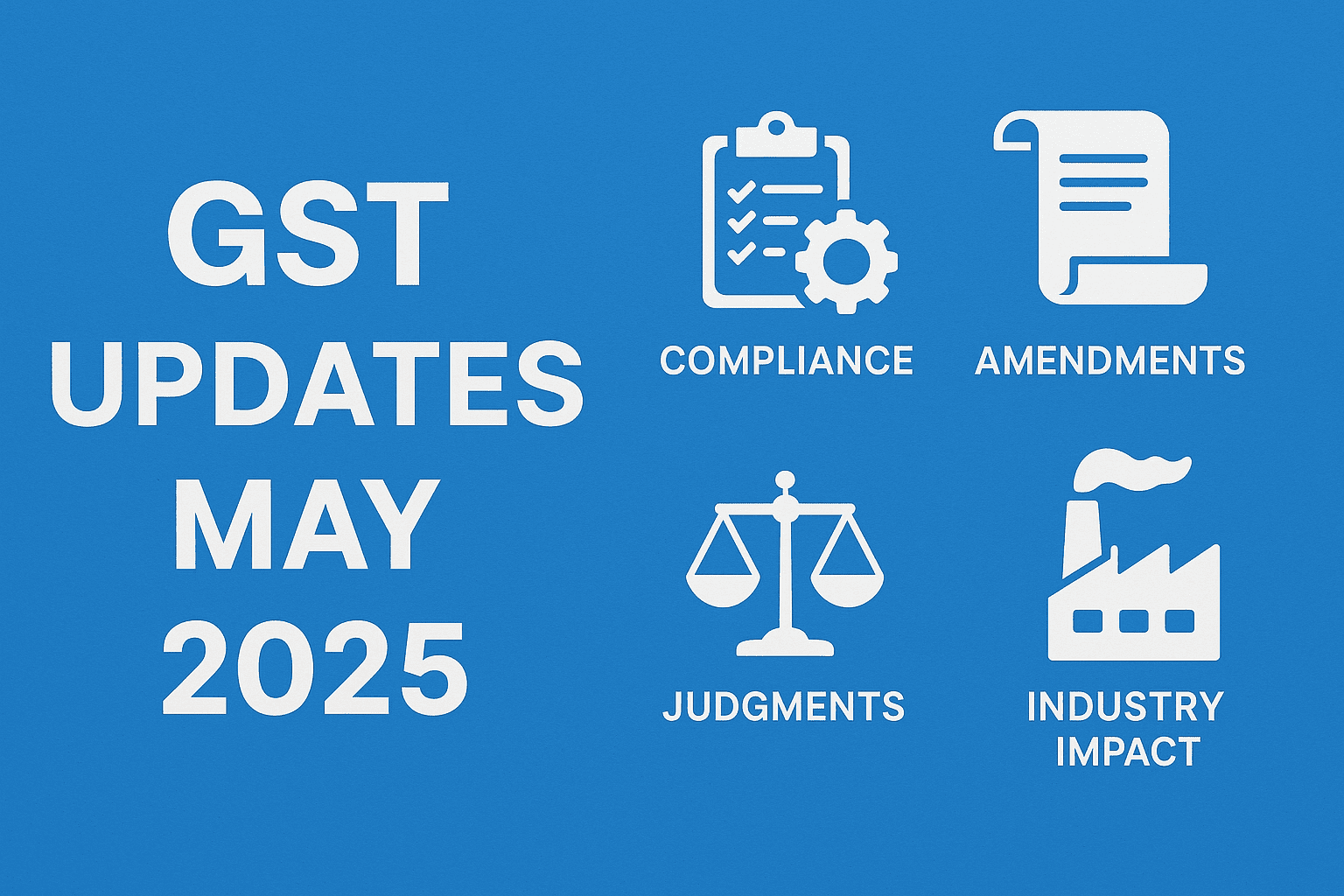
GST Updates – May 2025 Digest
summary of key developments under GST for May 2025, including compliance changes, judicial rulings, and upcoming transitions
Loading Sompalli & Co...
Expert insights, industry updates, and professional advice from Sompalli & Co.
In India, the new income tax law and rules — introduced through the Income-tax Act, 2025 — are scheduled to come into effect from 1 April 2026 (start of the financial year 2026-27). This means all substantive provisions of the new Act and the accompanying simplified rules and forms will apply for income earned on or after that date, unless any specific provisions mention a different effective date.
Read Article
summary of key developments under GST for May 2025, including compliance changes, judicial rulings, and upcoming transitions
May Month Update
With the growing popularity of cryptocurrencies, NFTs, and other digital tokens, the Government of India has implemented a structured tax framework under the Finance Act, 2022 to regulate the taxability of Virtual Digital Assets (VDAs). This article breaks down the applicable provisions, tax rates, reporting requirements, and compliance obligations in a practical and professional manner for Chartered Accountants, Tax Professionals, and Crypto Investors.
All Types of GST Refunds in India – A Complete Guide with Sections & Rules
Effective from 1st April 2025 Key Changes in TDS for FY 2025-26
A Joint Development Agreement (JDA) is a legal arrangement between a landowner and a real estate developer (builder) wherein the landowner contributes land, and the developer undertakes construction and development. Instead of monetary compensation, the landowner typically receives a share in the constructed property (residential/commercial units or revenue share).
In the complex landscape of GST compliance, one common dilemma arises when exported goods are returned by the foreign buyer after IGST has already been paid and refund has been claimed. A key question is: Can a GST credit note be issued under Section 34 of the CGST Act in such a case? The answer is No — and this article comprehensively explains why, along with legal references, practical treatment, and alternate solutions for businesses and consultants.
In an era of increasing financial complexity and digital transaction volumes, traditional audit methods often fall short in detecting sophisticated fraud schemes. This gap is where forensic audit analytics—powered by data science and automation—plays a critical role. By applying algorithmic scrutiny to financial records, auditors can uncover hidden patterns, irregular behaviors, and potential misconduct that may otherwise escape manual review.